The Slow Food Manifesto begins with the following two sentences: “Our century, which began and has developed under the insignia of industrial civilization, first invented the machine and then took it as its life model. We are enslaved by speed and have all succumbed to the same insidious virus: Fast Life.” While they focused their resistance to fast life on food, it’s clear that this valorization of speed didn’t just impact how we eat. And thus, the Slow Food movement inspired so many other slow movements that embrace mindfulness, relationship-building, community care, and values-driven work/living. While these movements are all about different aspects of our lives and different professions, there is so much consistency around what they are rejecting and their visions for a better future.
Carlo Petrini, the larger-than-life leader of the international Slow Food movement (and its predecessor Arcigola), died in late May in Bra, Italy, the town he was born in and turned into an international center for the study of traditional foodways and biocultural diversity. In a New York Times article written after his death, there was a link to a really weird critique of Slow Food from 2018. The author had worked in farm-to-table restaurants in Brooklyn and wrote about how the “strong and strict values” of the Slow Food movement led her to rebel and revel in the enjoyment of McDonalds hamburgers and fries. She writes–
The Slow Food tenets required the restaurant purchase its ingredients within 200 miles of the restaurants; farms available to us were limited. Our guests knew that by visiting us, a meal for two would never cost less than $30 — admittedly out of reach for many… But I’d soon grow exhausted of “good, clean, and fair” food, and realized that adhering to the Slow Food movement encourages a type of disordered eating. The organization’s evangelicals wouldn’t deign to eat anything falling outside the good, clean, and fair guidelines.
There is nothing in the tenets of the Slow Food movement that requires only using local ingredients. Even Petrini himself said “we prefer, as far as possible, to use what the territory has to offer” which hardly seems like an edict and acknowledges that it’s not always possible to do so. I’ve also never read anything from people writing about Slow Food that demonizes people who occasionally eat fast food (and especially in the way the author of this describes eating at McDonalds in her childhood – it was all about love and connection with her dad!). The tenets of the movement are good, clean, and fair, which are focused on pleasure, conviviality, local foodways, seasonality, safety, sustainability, worker rights, and social justice. There’s no purity test with Slow Food. Fine dining restaurants like the ones she worked in have turned localvorism into an orthodoxy (with these 200 mile rules) and a gimmick to trick wealthy patrons into paying more for their food because they feel like they’re getting something truly rare and special (reflecting the VIPification of everything). It honestly does sound like she was in a cult, what with having to teach employees how to hide prohibited fast food from their superiors.
Also, what the Slow Food movement promotes is not localvore fine dining establishments, but the humble osterias of Italy – mom and pop local restaurants that served local specialties and were affordable to all. According to Petrini:
Osterie d’Italia, sussidiario del mangiarbere all’italiana (Osterie of Italy, a guide to Italian-style eating and drinking) came out in 1990; it was and is a directory of welcoming places to eat, where you can enjoy the dishes and wines of the territory you are in without being bled dry by overpricing or imprisoned in improbable fantasy settings. In opposition to those who would like to turn mealtime into a hasty pause or a ceremonial rendezvous, Slow Food sees the osteria as the symbolic locus of traditional cuisine, run as a family business, with simple service, a welcoming atmosphere, good-quality wine, and moderate prices. We are not museum curators, and it is not our intention to bring a dying breed of business tied to the rural society of the past (or the urban one, before consumerism) back to life. Rather, we want to give new visibility to a realm overlooked by literature and by the guidebook writers, a place that can still respond to the needs of thousands of consumers and reflect the profound changes that domestic and commercial cooking have undergone in modern Italy, with all the inevitable contradictions that entails (Slow Food : The Case for Taste, pages 60-61).
Nothing there requires that all of the ingredients come from their local vicinity – something that is virtually impossible in our current context, especially in some areas of the world. These sorts of orthodoxies were created by others (mostly Americans, let’s face it) like some sort of purity test. Slow Food was not just about preserving local foodways and working towards food justice, but about pleasure and slowing down. These orthodoxies make it less about discovering wonderful new gustatory pleasures and more about demonstrating that you’re a “good person” or are intellectually pure. It adds this element of elitism, which is so American, because people need to feel morally superior or that they are getting something extra rare and special that others don’t have access to. Frankly, it drains the pleasure from the act of discovering new, local, seasonal foods. It also puts the bar for slow food so high that most people would of course just give up and choose highly processed, unethically sourced, and unhealthy fast food.
Neither slow librarianship nor Slow Food demand purity. You’re not expected to do everything perfectly according to some standard that doesn’t actually exist. I find that most sorts of strict orthodoxy lead to failure whether that is around our diets, our media viewing, our tech use, our mindfulness practices, and so on. Becoming more mindful of our behavior, setting realistic goals for ourselves, and giving ourselves grace when we occasionally fail is the path toward building healthy, long-lasting habits.
All that said, Slow Food and slow librarianship really could quite easily just become movements solely about our individual pleasure and well-being. For some people it clearly has. Slow Food could simply be the province of the wealthy where they get access to farm-to-table restaurants and the bounty of the farmer’s market, while the 99% eat more affordable highly-processed foods. Slow librarianship could simply be for those with tenure or power and privilege, where White managers and long-tenured librarians are able to take their time, set healthy boundaries, and put their well-being first and all other library workers are still expected to “prove themselves” and prioritize work over all else.
The Slow Food movement has had to contend with this critique from the start:
Though we never ceased to affirm the cultural worth of gastronomy and the right to pleasure as indices of the quality of life, for a long time we still had to worry about justifying a choice that was often portrayed as purely hedonistic and a political retreat. Folco Portinari, an intellectual who took an active part in creating Arcigola and elaborating its initial ideas, invited the readers of “L’Arcigoloso” at Christmas 1989 not to trust either “moralistic revolutionaries” or “people who never laugh.” The task of the new association was to combine styles and notions that were thought incompatible until that time: excellent quality and affordable prices, enjoyment and health, delight in life’s pleasures and social awareness, quickness and lazy rhythms. The purpose? To create an original and unusual social group that would be open, democratic, and uncontaminated by particular interests, and that would avoid making itself ridiculous with rites, protocols, and trappings (Petrini, Slow Food : The Case for Taste, p. 30).
Folco Portinari, author of the beautiful “Slow Food Manifesto,” himself wrote that “there can be no slow-food without slow-life, meaning that we cannot influence food culture without changing our culture as a whole.” Even if you can afford to be a localvore who only eats foods grown within x miles of your home, you’re not doing Slow Food right if you’re just focused on your own pleasure. Slow Food encourages working to change the structures that make eating local, healthy food less accessible to people with less power and privilege as well as supporting your local food growers, pickers, and makers. Similarly, slow librarianship requires solidarity, community care, and combatting the structures that keep people from being able to slow down; structures that engender precarity and create different employee classes or strata.

Someone posed a question at the CALM Conference asking what advice I had about slow librarianship for someone who was antiracist, but embraced neoliberalism and capitalism. While I don’t have any additional context for their question, I imagine that they are looking for a slow librarianship that is apolitical (the idea that one can disentangle racism from capitalism is also interesting, but I won’t go there in this essay). One of the pieces of feedback I received from another conference attendee was that my talk was too political because I talked so much about neoliberal capitalism. I believe that how we work is inherently political. How we view our roles, how we prioritize work over our well-being, how we value efficiency over relationship-building, how stratified and siloed our organizations are, the manufactured scarcity and precarity many feel – are all products of our societal values, which arise from neoliberal capitalism. Neoliberalism is a distinctly individualistic ideology. As Karen Nicholson wrote, “the primacy of the individual within neoliberal frameworks masks systemic inequalities. It promotes self-interest rather than the pursuit of larger shared social concerns” (Nicholson Value Agenda, 9-10).
While I could easily write “the business case for slow librarianship,” especially given the tremendous costs of burnout and turnover to the institution and the value of diversity to a company’s innovation potential, the values of slow librarianship exist in direct opposition to neoliberal values. If you have embraced neoliberalism, I would assume that you are individualistic and focused on your own individual career career advancement. I would assume that you believe that if you prove yourself enough, you’re going to get ahead in your career. You would rather fight for your own advancement than be part of a labor union where everyone gets the same cost of living adjustments (how’s that fair when I work so much harder? you might think). You see your colleagues as competition. I don’t know how you can embrace slow librarianship without embracing solidarity and community care. Sure, you can adopt mindful practices and make time for relationship-building with your patrons while still embracing neoliberal capitalism if you have the power and privilege to do so, but if you embrace individualism and competition over solidarity and community care or addressing the barriers that others with less privilege face when trying to prioritize these same things, you’re not practicing slow librarianship. It’s like shopping at a farmer’s market while working for Monsanto and saying you’re practicing Slow Food.
Slow librarianship operates in a space between two opposite critiques: 1) that it is simply about self-actualization rather than structural change and is not political enough and 2) that it is far too political. Carlo Petrini writes that Slow Food experienced those same critiques:
This was the attitude taken by the leftist intelligentsia when Arcigola was launched in 1986: they looked down on us as a bunch of good-timers interested only in stuffing ourselves, while from the other side, the food and wine specialists affiliated with the Accademia Italiana della Cucina distrusted us left-wing gastronomes as incompetent intruders with an ideological agenda (Slow Food : The Case for Taste, pp 28-29).
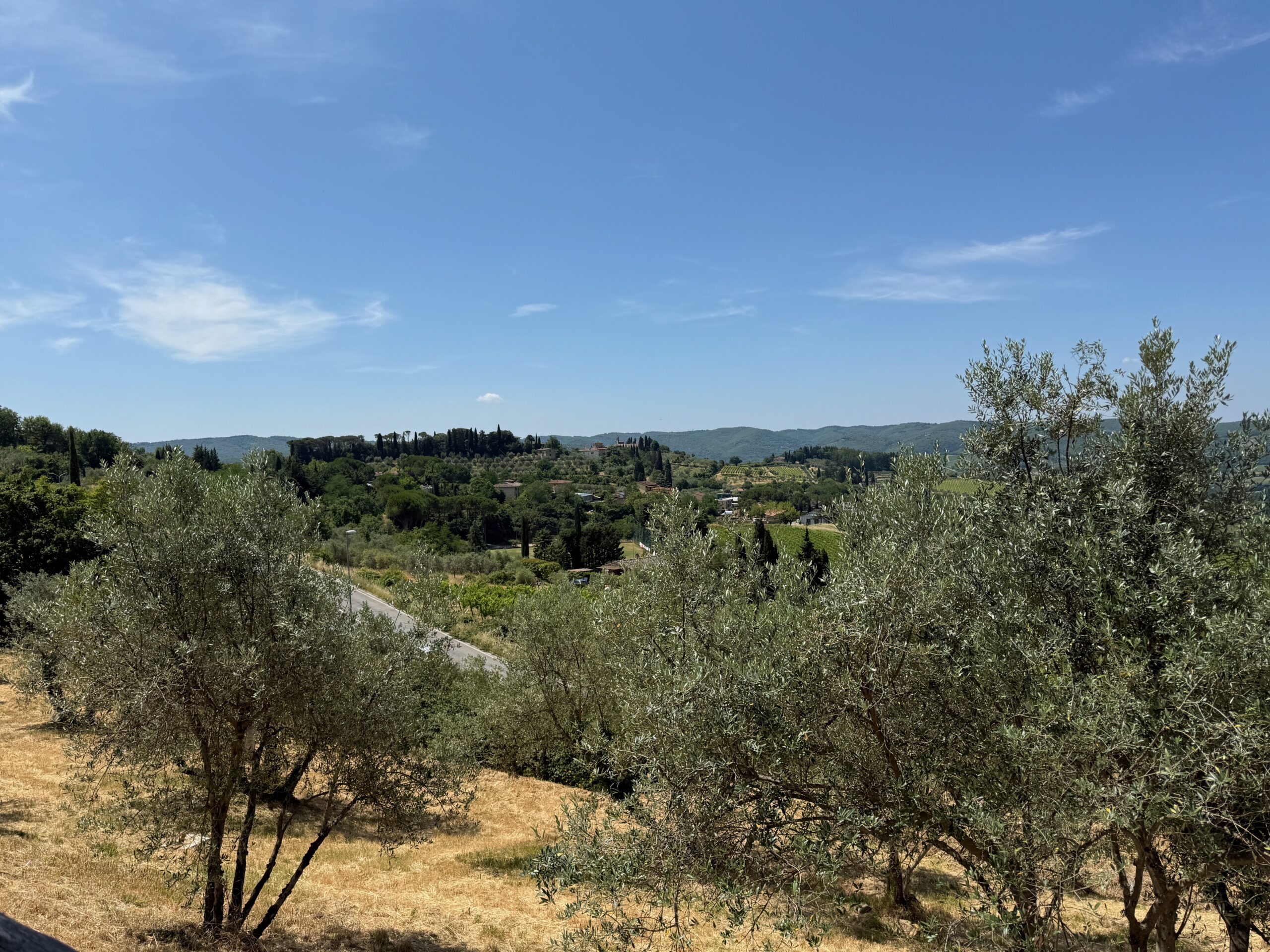
I think slow librarianship, like Slow Food, is a philosophy rather than a very specific prescription and is about moderation rather than orthodoxy. The key to both is slowing down and being mindful about the choices you’re making. We all live and work in different contexts with different affordances and limitations. Trying to eat local food where I grew up in South Florida would have been impossible, but I probably could do a decent job of it here in Oregon where everything grows beautifully, there’s a farm a mile’s walk from my house, and there’s even a flour mill less than an hour away.
Similarly, there are things you may be able to easily change about your organization or relationship with work at your place of work that would be impossible for someone else and vice versa. I get a lot of questions asking “how can I do slow librarianship when ____ (raises are discretionary, the powers that be expect us to provide data that demonstrates our value, my colleagues have all normalized overwork, my library has lots of different ranks/strata, I’m early in my career, etc.)?” We all face different limitations. If you absolutely have to do x, y, and z to keep your job or get raises and there’s truly no possibility of changing that (even with collective action), you’ll need to look to other parts of your work for possibilities for change. It’s also important to distinguish those things you truly can’t change and those things you think you can’t change because of the limitations of your current (possibly individualistic) POV. There’s usually more capacity for change, either collective at least small individual change, than you think.
I’m not a manager and thus have very limited ability to influence the direction of our organization, but that doesn’t mean there aren’t spaces where I can make a difference. I specifically chose to volunteer to serve as the chair of our Collection Development Committee (which is not a popular role) because it’s one of the only committees that includes people from every area of the library (though it was historically dominated by folks in reference and instruction) and I felt that I could foster positive change by getting other departments more engaged and leading more truly collaborative cross-departmental projects. Our awesome collaborative work over the past year in building a world languages collection has inspired folks in the library to look at other places where we could work together across library departments. I’m sure most of my colleagues see this as a drudgey leadership role that they’re grateful someone else took on, but I always saw it as a way to foster slow librarianship in a small way across a good chunk of the organization (yes, there are drudgey parts too). And beyond the culture work, I can also work on my own efforts to improve my reflective practice, spend less time on email and Slack, set healthier boundaries, and continue being a hypewoman for my fantastic colleagues.
Find the places where you can effect positive change, both in your own worklife and in your organization, even if that change seems small and you don’t have positional authority. Your efforts don’t have to be big, highly-visible, or heroic. They don’t need to be perfect. They just need to come from a place of hope and care inside of you where you believe a better worklife and a healthier organization is possible.
Nicholson, Karen P. “The” value agenda”: Negotiating a path between compliance and critical practice.” Canadian Libraries Assessment Workshop (CLAW) 2017 Conference, Victoria, BC.
Petrini, Carlo. Slow Food : The Case for Taste, Columbia University Press, 2003.
Portinari, F. (1989). Slow Food Manifesto. Slow Food International.
Wells, P. (2026, May 24). For Carlo Petrini, the Point of ‘Slow Food’ Wasn’t the Food. It Was Us. New York Times.
Zuppello, S. (2018, October 18). How a Cult-Like Food Movement Drove One Woman to McDonald’s Instead. Eater.