It just keeps getting better

By Meredith Farkas | August 8, 2008


Breaking the glass

Originally uploaded by librarianmer

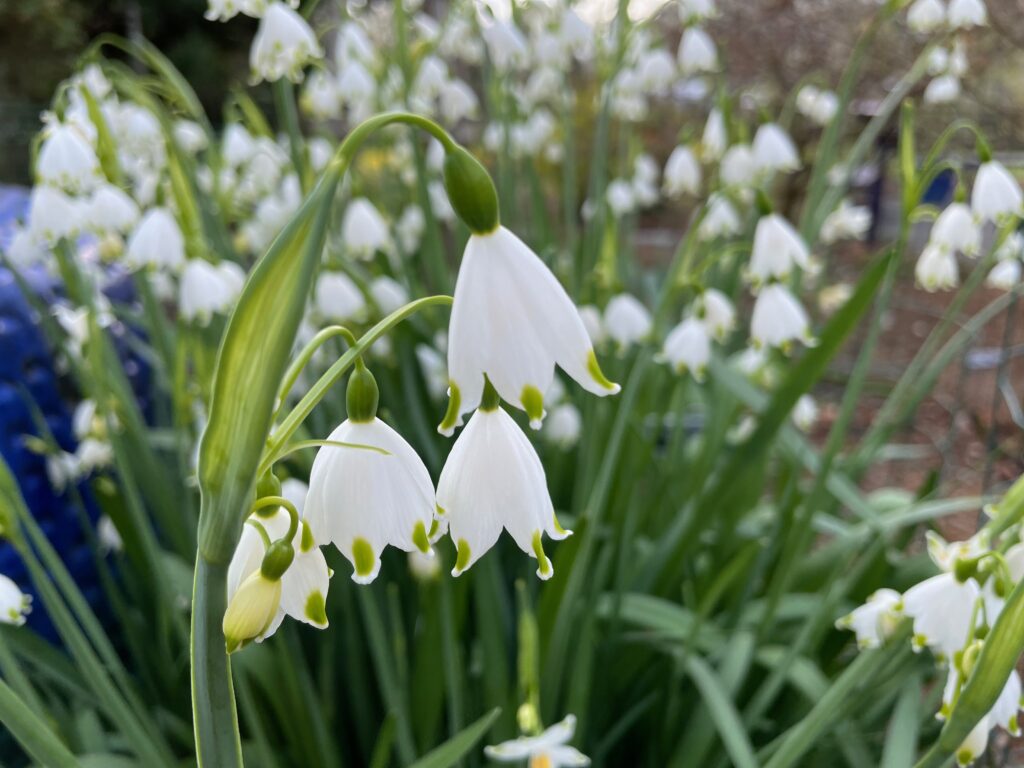
Four years ago today, Adam and I stood up on a mountain overlooking the Napa Valley and promised to spend the rest of our lives together. I remember thinking that day that I couldn’t possibly love him more than I did at that very moment. I’ve been pleased to find out how wrong I was. I always thought marriage would take the excitement out of a relationship, but I’m really just as jacked-up crazy about Adam as I was when we first met. It helps that I’m married to the most lovable person in the world.

Happy Anniversary, Adam. I would not be where I am in my life, career, or general head-space without your generosity, encouragement, support, humor and all-around wonderfulness. I’m so lucky to get to spend the rest of my life with you.

Topics: hi | 9 Comments »

The best laid plans of mice and Meredith

By Meredith Farkas | August 5, 2008

It’s amazing how I manage to delude myself year after year. Every spring I make a list of projects I want to get done in the summer when I “have more time.” And every year, I barely get through any of them. This year I was really optimistic about what I could accomplish and I’m very disappointed with my progress. I’m either overly optimistic or I really don’t learn anything from history.

I’ve been the Head of Instructional Initiatives for four months now and I’ve really been enjoying the new position. I’m also the liaison to the social sciences, which is the largest division at the University by far. It’s brought a bit more stress and a lot more work than I had before, but I’m loving the new challenges. I get bored pretty easily, and this is definitely a huge job with lots of different elements that will keep me on my toes for a long time.

Here’s what I was able to get done this summer:

Here are a few of the things that… well… didn’t happen:

It’s hard to believe that the students will be back in a week and a half and the onslaught of instruction will begin soon after. I had wanted to be a lot more prepared for it, but there are only so many hours in the day, and the best laid plans often go awry thanks to hard drives failures, proxy server meltdowns, student access issues, Voyager upgrades, and really tough research questions. C’est la vie.

Topics: instruction, librarianship, MPOW, Work | 12 Comments »

Not without the Web

By Meredith Farkas | July 28, 2008

A week and a half ago, I was giving a talk in South Florida (where I used to live) and it’s made me a little reflective about how much my life has changed since then.

Four and a half years ago, I was a Library Assistant I at the Boca Raton Public Library, working in circulation. Ten days ago, I stood at a podium in Ft. Lauderdale as the keynote speaker of the Southeast Florida Library Information Network’s (SELFIN) annual conference. I started my talk by commenting on this and stating that I think my story is indicative of the growing openness of our profession — how anyone with good ideas and a little chutzpah can achieve a lot in this profession regardless of their age or years of experience.

But could I possibly have made this huge transition without the Web? Not a chance. Without the Web I wouldn’t have been able to get my thoughts and ideas out there on my blog. Without my blog, I wouldn’t have gotten a book deal. Without the book deal, I wouldn’t have gotten the speaking gigs and the column. Even if I’d faithfully served in ALA and wrote peer-reviewed articles until my hands bled, I probably still wouldn’t have been up at that podium without the Web.

And it made me think about what else I wouldn’t have been able to do without the Web. Like meet my husband.

Six years ago, I was despairing that I’d ever find a true life partner. Anyone who’s lived in South Florida knows how many shallow, materialistic people there are in that area, and how difficult it can be to meet kindred spirits. After meeting one too many guys who looked like they spent more time on their hair than I ever have, I decided to try match.com. Within a day of creating my profile, I had about 80 emails from interested men, but ruled 95% of them out due to extreme spelling/grammatical errors, the scent of desperation, or the obvious form-letter nature of their email. I figured I might have better luck finding someone myself instead of waiting for them to find me. While looking through people’s profiles, I saw a guy with an adorable smile who quoted the Simpsons, was well-educated, and who said he was the sort of person who friends depend on to drive them to the airport. Considering that my biggest pet peeve is unreliable people, that statement was probably the most appealing thing anyone could have written. I deleted my match.com profile after two dates with Adam and never looked back. I’m still amazed by my luck.

Around the time I met my husband, I was applying to library school programs. We’d only been together several months when I found out I’d been accepted to the University of Maryland’s LIS program and was offered a huge fellowship to go there. What an awful decision to have to make so early in our relationship. Had I gone to Maryland, I feel pretty sure that Adam and I would not have stayed together, as I have a very low tolerance for long-distance relationships. Instead, I chose to get my MLIS at a distance from Florida State. That way, we could build our relationship and I could go to school. If the Web didn’t exist, I wouldn’t be married to Adam (heck, I wouldn’t even have met him).

Almost four years ago, I was getting close to the end of my MLIS program and was frustrated by the lack of connection/community between students. I was getting increasingly interested in social software and knew no one from school who was interested in that stuff. So, after driving my husband crazy talking about the sort of stuff I’ve blogged about over the years, he convinced me to start a blog. And from that, I made so many wonderful friends — people who challenge me, who make me laugh, who teach me things, and who inspire me. My life has been so enriched by knowing so many of you. If the Web didn’t exist, I wouldn’t have this amazing (and cherished) professional network.

The list goes on and on. I’ve reconnected with old friends online. I’ve planned a destination wedding in the Napa Valley entirely online (from choosing the location to the photographer to the officiant). I found other people with common interests online. I’ve learned so much online. And while we take it for granted every morning when we fire up our computers and open our Web browser, it’s really changed so much about how we live. It has opened up opportunities to people who may never have had them otherwise. It’s allowed for new ways to contribute to the profession and to network. It’s allowed good ideas to get an audience. It’s given us opportunities to connect with people with common interests. It’s really kind of amazing. I do take some credit for getting to where I am, but, really, none of it would have happened without the Web.

How has the Web changed or enriched your life?

Topics: social software, librarianship, tech trends | 15 Comments »

Love for sale

By Meredith Farkas | July 10, 2008

Seriously, I just don’t get it.

So, Google used to have a blog just for librarians called Librarian Central. I remember hearing about it from lots of folks way back when, but I didn’t read it because I figured if Google came out with something cool, I’d hear about it from someone’s blog. Apparently, the blog has not been updated since late June 2007, right after ALA Annual in DC. Google also didn’t exhibit at this year’s ALA Annual, which is probably even more glaring because it was a short plane ride away from their headquarters.

Some people are up in arms because they feel that Google has some obligation to libraries beyond the contractual obligations to those they’re working with. Some people feel like librarians have been used. I must be missing something, because I don’t feel anything of the kind. Marketing is designed to make you like a company or product. Their marketing worked.

It seems to me that between 2005 and 2007, Google was making a big push to get partner libraries for their book scanning project. To do that, it made good sense to market to libraries, which is why they exhibited, gave talks, and had a blog. Perhaps they have enough partners now to keep them busy for a gazillion years. Perhaps they’re realizing that this wasn’t such a great market to get into. I have no idea. But I really don’t see anything more nefarious or insulting behind that blog ceasing its existence.

Maybe I’m not so up in arms because I never actually thought that Google cared about librarians. Google is a company. Their goal is to turn a profit. Even when they are engaging in activities that benefit people and where we can’t exactly figure out how they’d make money from this, their goal is to make money. It’s just like any of our vendors. Readex, for example, digitizes old journals that they get from libraries all around the country. When they have a big enough collection of digital content, they sell it for BIG BUCKS. At least we’re getting Google’s products for free (well, with a heapin’ helping of ads of course).

So, there are all these libraries with awesome collections that aren’t being digitized. Google comes in and says “hey, we’ll digitize your books for free and let you have the digital copies for your students.” Google was not doing this for the good of those libraries; they were doing it for the good of Google. But clearly the Universities also saw how this project was in their best interests or their lawyers wouldn’t have signed off on it. These Universities now have tons of their books in digital format that students, faculty and staff can enjoy from anywhere. University of Michigan makes them available in their catalog. It’s awesome. Maybe I’m naive, but none of this really gets me up in arms.

As someone who supports distance learners studying military history, I am insanely grateful to Google Books (and the Internet Archive). So many of the pre-1923 works that my students are looking for are available online! It’s saved us money. It’s also making our special collections materials more accessible to our online students as so many of the books up there (which can’t circulate) are in Google Books. And now with the API that Google released, we may soon be able to have links to Google Books show up in the catalog. Google Books has benefitted my library and its students tremendously… and it’s cost us nothing. Again, awesome.

I was asked to be on PBWiki’s Educational Advisory Board way back when. Trust me that I wasn’t honored to be asked, nor did I think that PBWiki truly and genuinely cared about librarians and educators. They just wanted to get our feedback to make their products better. And that’s fine with me because I thought I could help make a product I liked better meet my needs. Win win. When they started to ask me to talk up PBWiki to the press and to basically do their marketing for them, I quit. But it’s not as if I was disillusioned. They never gave a damn about librarians other than what the could get from us. And you know what? I didn’t care about PBWiki beyond what I could get from them either. My only feelings for PBWiki come from the quality of their product, which has gone rapidly downhill with their new 2.0 wiki.

Where does this “Google punked us” idea come from? What were we expecting that we didn’t get? How has Google left “us in the information dust to rot like an old microfilm machine?” People are making it sound like these Universities who got into bed was Google were like some poor drunk co-ed who thought the guy she was sleeping with really cared about her, but wakes up to find him gone. I obviously wasn’t privy to the backroom machinations that went into these deals, but I don’t think these major Universities went into this deal blindly. I’m wondering if any people working at the libraries involved in the Google Books project feel like Google cheated us.

I like Google Books, Google Scholar, and Google Custom Search for my work in libraries just as much as I did before. I like them not because Google told me to or gave me a shirt (which they didn’t) or said nice things about libraries in a blog. I like them because they’re useful to me and to my students. End of story. Who actually promoted Google’s products only because of their marketing specifically to librarians?

If we’re promoting companies because they’re nice to us, then we are doing a disservice to every person who reads our blogs. Folks from PBWiki asked for my address several times so they could send me schwag and I ignored each of those emails. If I like a product, it’s because it works, not because the people who created it were nice to me or nice to librarians. My love isn’t for sale.

Topics: free the information!, libraries, search | 28 Comments »

Value in the online world

By Meredith Farkas | July 9, 2008

I’ve been thinking a lot about how we value online things in light of a few interesting posts I’ve read recently. The first was Walt Crawford’s post about some negative reactions people had to his charging money for the electronic version of his book. One critic wrote:

But seriously, Walt, $29.50 for a paperback is bad enough but $20 for the download? Downloads are free.* I could understand maybe asking for donations. Charging a buck or two is acceptable, if you want to be a dick. But $20 for a PDF is madness. Like, RIAA suing tween music downloaders for their parent’s retirement fund level of madness.

A commenter on another blog wrote this:

Since his book is published through Lulu.com, you can get an estimate for how much it would cost to manufacture the book on a per item basis: less then $10. Since he bought an ISBN, there’s some retail markup but even factoring that into the cost, he’s pretty much doubling the price for the printed edition. Charging twice as much as the printed edition for a download is a clear cut case of shenanigans.

Where does this idea come from that any creative work available online should be free? It’s ok to charge for a printed book, but to charge for a PDF of a book is unreasonable? If so, where is a book’s value? Is it in the paper and ink used to print it? Is it the weight of it in your hand? Or is it in the words and the creative work put into it? A book’s value comes from the creative work of the writer, and that should have value no matter what format it’s in.

Take me for example. I wrote a book that came out a year ago. It is currently only available for sale in print. No one has ever told me that I have no right to sell my book and make what little money I do from it. If I took that book and started to sell it online for less money (but not for free), I would be doing nothing different than if I only sold it in print. I’d just be making my book available via another format. I guess I fail to understand how something being in a different format ends up having less or no value.

That’s not to say that I don’t understand why some people give away eBooks for free. There are lots of good arguments for it from a marketing sense. It gets you more exposure. It makes people more likely to buy your books because most people really don’t want to read a book online. So if that’s the way you choose to market your book, great. But there are still lots of folks who charge for books in PDF, like Tim O’Reilly (this is a book I’m dying to read) and 37 Signals (though they also have a free version).

So many of us have argued vociferously that what we do online has value. Some argue that writing a blog should be considered towards tenure. Others argue that blog posts are as valuable as (if not more valuable than) journal articles. If the effort of what we put into our stuff online is equal to what we put into print, then there should be nothing wrong with making money from it. I don’t understand how one can say that people shouldn’t make money from their creative work because it’s online, but I think we all have these subtle (and sometimes unconscious) assumptions about certain things that we think should be free because they’re online. (And what we sometimes forget is that just because something is free doesn’t mean the person who created it isn’t making money off of us.)

And creative work isn’t the only thing that’s undervalued online. I’ve been wanting to create an online conference for some time; a conference that sort of fits into the big space between something like Internet Librarian and something like Code4Lib. We need a conference for librarians who are tech-savvy enough where most of Internet Librarian is a review, but who would feel totally over their head at a Code4Lib. There are a lot of us who fit into that category. We also need online conferences. We aren’t all in the position of being able to travel all over the country several times a year, so it makes sense to develop online alternatives. And technologies have come so far in recent years that an online conference could be developed that would be highly interactive and provide real value to attendees.

Why have I not bothered to pursue this yet? Well, other than the fact that I’m really busy, I haven’t done it yet because I don’t think people will value an online conference in the same way they would value a physical one. When most folks sign up to attend an online webcast or something like that, they rarely ask their supervisor for the time off to do it. They rarely tape a sign to their door saying “at an online conference” so people will leave them alone. And if something comes up at work, they will likely leave the webcast to deal with it. Hey, I’ve done it. I actually had a student in the grad school class I taught last semester who had his reference shifts scheduled at the same time as our synchronous online class sessions. Talk about continuous partial attention! The fact is, people will not value an online conference/webcast/chat session in the same way they would a physical one. They will not carve out their time in the same way. And as a result, they will be likely to drop it when something else comes up.

We talk so much about wanting to have more professional online interactions, especially at a time when flying has become almost intolerable. But we don’t give them the same amount of weight as face-to-face interactions. And I think until we do, we will not have truly successful synchronous online conferences.

Thanks to Laura Crossett who really got me thinking about the “2.0 Aesthetic” and what it means for us not to value things because they’re online.


*No, downloads are not free. Bandwidth does cost money and when something becomes a runaway hit, it can get extremely expensive to provide access to it. We can download This American Life for free. But it cost WBEZ $152,000 for the Internet bandwidth to distribute the show in 2007 (please give them money to keep This American Life freely downloadable — I did).

Topics: free the information!, tech trends, our digital future | 26 Comments »

Want an awesome job?

By Meredith Farkas | July 6, 2008

There is a very small, select list of people who I really see as role models in this profession. One of them is Mary Chimato, Head of Access Services at North Carolina State University. Her generosity, her strength, her humility, her sense of humor, her unwillingness to be steamrolled by anyone, her focus on being a truly great manager… she exemplifies everything I hope to be. Whenever Mary writes a blog post about being a manager, I save it and read it several times, because she really knows what she’s doing.

There’s an opening at NCSU that involves working directly under her to develop innovative access services at the library. The idea of working with Mary is so tempting that I’d almost be willing to leave my new and rather awesome job for this position, but things are finally falling into place this year with library instruction and the opportunities for change are way too good to pass up. However, that wouldn’t stop you from applying for this Associate Head of Access and Delivery Service position at NCSU, a library that is already doing so many innovative things and will be building a new library over the next few years. If you’re looking for a job where you can really effect change in public service, this would be perfect.

I’m still trying to figure out if I have anything to write about my time at ALA (or that would be politic to write in a public forum). I had a great time and managed to create a schedule that didn’t completely exhaust or overwhelm me, but this conference just didn’t seem to have the energy that others did. And that may just have been how I experienced the conference, but I’ve heard the same from a few others (with the exceptions of a few events like the Social Software Showcase). Still, it’s always a pleasure to see my friends and colleagues and share interesting ideas. I always come from conferences with great ideas, but it’s usually more from talking to people instead of from going to sessions. Is that something I really need to fly across the country for?

Topics: career, ALA, libraries | 6 Comments »

Me in a cloud

By Meredith Farkas | June 22, 2008

Wordle is a fun little tool! You can put in your del.icio.us username or paste in some text and get a pretty neat-looking word cloud.

Here’s my CV as a cloud:

CV_wordle

Here’s a list of the titles of my presentations over the past 2 1/2 years as a cloud:

Wordle_present

Topics: about me | 1 Comment »

LISjobs.com Logo Contest

By Meredith Farkas | June 22, 2008

Would you like your creative work to be immortalized on a major website in our profession? Here’s your chance!

LISjobs.com LOGO CONTEST

LISjobs.com is seeking submissions for a new logo that reflects its mission of job hunting and career development for librarians and info pros. This logo will be featured on the upcoming redesign of the LISjobs.com website, as well as in additional print and online materials.

Guidelines:

Please keep the design in a landscape (wider than it is tall) format, and use lighter colors to help it stand out against the redesigned site. While creating your design, keep in mind that the new LISjobs.com expands coverage of career development and library education issues, serving all stages of info pros’ career cycle. I’m seeking a logo that best represents that mission.

Please submit your design as a .jpg file to rachel@lisjobs.com by Monday, July 7. If your design is chosen, please be prepared to submit a high-quality Illustrator (.eps) or Photoshop (.psd) graphic (vector preferred).

If your design is chosen, you affirm that you will transfer all rights over to Rachel Singer Gordon/LISjobs.com. By submitting a logo design, you affirm that you are its creator and have not used others’ protected work in its design. You will be credited on the LISjobs.com website as the logo designer, with a link back to your own web presence if desired. You will also receive a free resume posting on LISjobs.com (lifetime, or as long as I still offer this service) as well as an autographed copy of What’s the Alternative: Career Options for Librarians and Info Pros (ITI, 2008).

The winning design will be chosen by Rachel Singer Gordon. If no design is selected, there may be no winner of this contest, and LISjobs.com may stick with its old logo.

Topics: hi | No Comments »

Anaheim-bound

By Meredith Farkas | June 21, 2008

Oh Thursday I’ll be heading to ALA Annual. I wish I could muster up more excitement about going to Anaheim, but the location doesn’t exactly thrill me (nor does the amount of flying and driving it will take to get there). Then again, ALA isn’t really about the location so much as the people. And there are lots of people I’m looking forward to seeing there. I really hope to get the chance to meet some of the students from the course I taught for San Jose State University since most of them live in Southern CA and I know a few are attending ALA. I couldn’t have asked for a better, more insightful and enthusiastic group of students.

Here’s my schedule so far. Adam and I are staying at the Marriott right by the Convention Center, which is a nice change from last year when we were a zillion miles from the Convention Center in DC. I’m covering the exhibit hall again for American Libraries so that means lots of time chatting up vendors and eating free twizzlers and peanut butter cups.

Thursday, June 26, 2008
Arriving Thursday afternoon
Dinner with the hubby

Friday, June 27, 2008
12:00 PM - 3:00 PM: Mover and Shaker Lunch
4:00 PM - 6:00 PM: Jim Rettig Advisory Committee Meeting
6:00 PM - 8:00 PM: Web Junction Member Reception or perhaps dinner

Saturday, June 28, 2008
Spending the day covering the exhibits for American Libraries with my intrepid editorial assistant/husband.
12:00 PM - 2:00 PM: EBSCO Academic Libraries Lunch
7:00 PM: Dinner with a friend
11:00 PM: Facebook Librarians After Hours @ Pop the Cork Wine Bar (if I’m conscious)

Sunday, June 29, 2008
8:00 AM - 10:00 AM: Readex Breakfast (I’m giving a talk called Academic Work is Social: User Generated Content in Support of Research and Learning)
Lunch: No plans, but will probably eat lunch early-ish so I can get to the TTT nice and early.
1:30 PM - 3:00 PM: LITA Top Technology Trends
4:00 PM - 5:30 PM: Bookcart Drill Team Championships (covering this for American Libraries)
5:30 PM - 8:00 PM: OCLC Blog Salon
Afterwards: ???

Monday, June 30, 2008
Morning: Check out of hotel
10:00 AM - 12:00 PM: ACRL National Conference Committee, Virtual Conference Subcommittee Meeting
Lunch: No plans
Spend a bit of time at the exhibit hall
Leave for LAX for red-eye to NY.

I’ve had pretty low expectations of my conference experiences the past few times and they’ve actually ended up being pretty darn great. Here’s hoping for more of that since my expectations are rather low this time around as well.

Hope to see you there!

Topics: american libraries, speaking, writing, ALA | No Comments »

How I spent my vacation

By Meredith Farkas | June 21, 2008

Belly rubbing


Belly rubbing

Originally uploaded by librarianmer

Adam on the dock


Adam on the dock

Originally uploaded by librarianmer

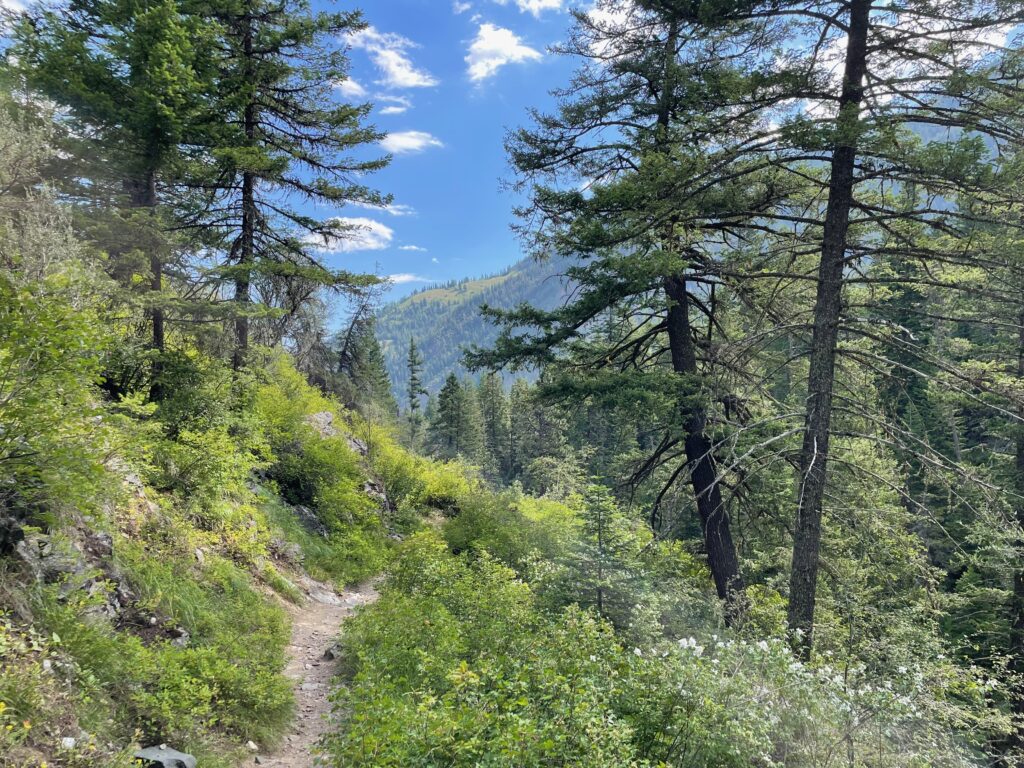
I have to say that this was one of the best vacations I’ve ever been on. Staying in a beautiful place, taking hikes, eating great food, meeting nice goats and eating their delicious cheese, becoming friends with one of the best dogs ever… pretty darn close to perfect.

One week is never enough.

Topics: hi | No Comments »

Quiet time

By Meredith Farkas | June 13, 2008


Friends Lake

Originally uploaded by Dr.DeNo

Tomorrow morning, Adam and I are leaving for a vacation in the Adirondacks. This is the first time in AGES that our vacations haven’t either centered around a talk I’m giving or a trip to visit family. This is an honest-to-goodness no obligations, do-as-little-as-possible, email-and-feed-free vacation. And after the year we’ve had, we both really need it.

After that, I’ll be getting back for the second week of our distance learners’ Residency (the first time I ever get to meet the students I’ve worked with for two years previous) and then will be leaving on the 26th for ALA Annual in Anaheim. I’ll be covering the exhibit hall again for American Libraries and am on two committees so I expect to be pretty busy. But I’ll definitely be part of the LITA Top Tech Trends panel on Sunday afternoon and wouldn’t miss the blogger salon for anything. Hope to see you there!

With all that going on, you can expect this blog to be pretty quiet for a while.

Topics: american libraries, Work, ALA, hi | 2 Comments »

Building Academic Library 2.0

By Meredith Farkas | June 13, 2008

I am on a roll with this travel mojo! On Monday, I visited the Annual Conference of the Association of Christian Librarians in Quincy, MA to give a preconference entitled Building Academic Library 2.0. Like Puerto Rico, it ended up being a terrific experience. Everyone was so friendly and I was fortunate to have a really sharp audience who asked thought-provoking questions that challenged me too. Someone from the audience gave me a very kind write up here.

My slides are displayed below. The first time I gave a presentation like this was when I gave that keynote at UC Berkeley last November. Since then, I’ve been working to improve it and make it work for various time constraints (anywhere between 45 minutes and a half-day). Of all the variations on this talk, this one is my favorite. I feel like I was best able to articulate where I feel libraries need to be going in the future. It also helped to have a really fantastic and receptive audience. Thanks to everyone who came and who planned this conference!

Topics: speaking, social software, librarianship, our digital future | 6 Comments »

If you haven’t heard of it, it’s new to you!

By Meredith Farkas | June 8, 2008

I don’t write much on this blog about the gadgets and applications I use, but I’ve recently started using several things that I thought people might want to know about and try for themselves (if they don’t know about them already). I often assume that everyone already knows about the things I’ve discovered, but after giving a lot of talks where I talk about these things, I’m starting to realize that isn’t the case. We all can’t keep up with everything, so it’s inevitable that we’ll miss some great little gem out there that could revolutionize the way we do things online.

Here are a few of the things I’ve discovered over the past couple of months:

I know, I’m probably the last person to get on the FriendFeed bandwagon, but I figure maybe one of my readers hasn’t heard of it. FriendFeed is a tool that allows you to follow what your friends are doing in all of their social applications. So if you want to see what I’ve been doing on this blog, in del.icio.us, Flickr, Amazon, Twitter, LinkedIN, Pandora and Slideshare, you can follow me on FriendFeed. It’s a nice place to keep up with what your friends are up to without having to visit all of their many sites and profiles. You can even subscribe to your feed of aggregated FriendFeeds in an aggregator, which means I don’t even have to add a new site to those I regularly visit.

Roku is my newest toy. Roku takes advantage of the Netflix Watch Instantly feature by allowing you to stream things from Netflix onto your television. Since most people don’t really want to watch movies on their computer, this is a fantastic little tool. It’s very simple: you just add movies and TV shows to your queue and then browse through the queue on Roku and choose what you want to watch. It only takes about 15 seconds to start playing on my connection. I wish Netflix had more stuff available for instant streaming, but I’ve got a pretty good-sized queue on there of movies and TV shows I want to watch, so that should keep me busy for a while.

I know Remember the Milk has been around forever and I actually had an account from a long time ago that I’ve never used and forgot the login for. But I’ve been skimming the book Getting Things Done and just recently read a post about how to incorporate GTD into Remember the Milk. I followed the instructions (well mostly — I’m not a total GTD convert, but I pick and choose what works for me) and now have a great system for keeping up with all of my projects and tasks. It’s fantastic. There’s also a Firefox extension that integrates RTM into gmail, so my tasks are always in my line of sight when I’m at my computer.

I’ve used Feed2JS to syndicate RSS feeds on a webpage for a long time, but Feed Informer is kind of amazing. Feed Informer is the whole package. You can combine RSS feeds. You can filter RSS feeds by keywords. You can choose different display formats. You can choose different export formats (JavaScript, Flash, PHP, an image, etc.). The only flaw is that, with the free account, you are seriously limited in the number of digests you can create (6). But it’s definitely the best thing I’ve found out there in the feed mixing/feed syndication market.

I’ve recently gotten very interested in widgets and since I’m a cut-and-paste techie, I need tools that will do all the hard work for me. I’ve been pretty happy with Widgetbox and noticed that a number of libraries are using it. I particularly like Penn State’s Research Jumpstart idea. I just discovered Sprout (thanks Infodoodads!) and can’t wait to start playing with it. Netvibes Universal Widget API certainly looks useful for developers, but not so much for me at this time.

280 Slides is awesome!!! I can’t believe someone went to the trouble to create what is essentially a web version of Apple Keynote. I played with it yesterday and was very impressed with its ease of use. So, for those of you who non-Mac users who fantasize about creating a presentation with Gradient and Gill Sans, here’s your chance! ;)

So, what cool things have you found recently? While you may think everyone and their cousin knows about it, chances are you’ll be giving someone a useful tip they wouldn’t have gotten otherwise.

Topics: free the information!, social software, tech trends | 10 Comments »

How Meredith got her travel groove back

By Meredith Farkas | June 8, 2008

Me on a giant banner
Last week, I was in Puerto Rico, speaking all-day at the University of Puerto Rico in Mayaguez (on the Western side of the island). I’ve gotten pretty tired of traveling over the past year, but this trip reminded me of what I loved about doing all this in the first place. The whole experience was fun for me, and, while speaking all day is always exhausting, it was less so thanks to the energy of the audience. The academic librarians I met in Puerto Rico were wonderful; so warm and welcoming and generous. One librarian and her husband were kind enough to take me hiking in El Yunque rainforest and to show me around San Juan. I usually get to meet great people when I speak at conferences (where I don’t already know people), but this time, I feel like I actually made friends. I was really blown away by their warmth and by the beauty and culture of Puerto Rico. I definitely plan to come back there soon and bring Adam this time. While I’m still not going to travel as much as I did before, this trip definitely brought back my travel mojo.

Thanks to everyone who helped organize my trip and who attended the conference. It really was a pleasure!

Topics: speaking, social software | 3 Comments »

Collecting blogs in archives

By Meredith Farkas | June 5, 2008

One of my former students from SJSU had an interesting question for me about archiving student and faculty blogs:

I am in the midst of reading Varsity Letters : Documenting Modern Colleges and Universities and I realized that a major hole in our archives is the documentation of the teaching and learning that is taking place. People don’t really write things down on paper anymore (as you know) so things like student notes, journals, etc. are more difficult to collect.

So I was thinking. I know a lot of our students and faculty are probably keeping blogs and I started thinking about using those as a record of student life, learning and faculty teaching… not all of them of course, but a representative sample.

Do you know of anyone who is collecting information for archives using say, delicious or a wiki?

I’m trying to wrap my mind about all the different possibilities for how to archive this information, which would be an awesome resource for future researchers and our institution.

This is something that I’ve thought about, but I don’t actually know about any academic initiatives to collect blogs, archive blogs, or preserve blogs. In the long term, it’s going to take a lot more than linking to them on a wiki or bookmarking them in del.icio.us. When I think about libraries archiving student and faculty blogs for future generations, I think about copyright, access, and preservation issues and my head spins. I’m not an archivist, but even I can imagine what a big deal it would be to archive these materials in the long term. Still, I know that blogs are going to be important artifacts for the future. These will be vital windows into our culture long after we’re gone… if we find ways to collect and preserve them.

So, I’m curious… is anyone else thinking about this? Is anyone doing anything about this?

Topics: blogging, our digital future | 22 Comments »

31 Day Comment Challenge: Days 26 - 31

By Meredith Farkas | June 3, 2008

comment_challenge_logo_2.png

Note: 95% of this was written on a flight from San Juan to Philadelphia, so please excuse any spelling/grammatical errors or anything that just doesn’t make sense. I haven’t had time to really proofread this and I wanted to finish the challenge in a reasonable amount of time.

Day 26: Exploring Other Ways to Comment

Today, I’m supposed to be looking at alternative ways to comment, such as through audio or video. Personally, I’m more of a text person. I express myself better through text than any other medium. But I can understand why others may want to comment in different media. Greg Schwartz recently implemented video commenting on his blog, and some people responded very positively to it. I’m sure some people would rather comment through audio or video. It would create a much more personal connection if you could see and hear someone making their comment. It would probably lead to people being more kind when they comment since they are really putting themself out there and it’s more apparent that the person on the other side of the screen is a human. It also might lead to fewer misunderstandings regarding the tone of people’s comments.

On the other hand, some people probably wouldn’t feel as comfortable commenting like that (me included). It could take more time and effort to comment. I know I often comment in my PJs, or while talking to my husband, or while watching TV, or all three at once. To do video, I’d really have to stop everything and focus on that, which just doesn’t fit into my current workflow.

I can definitely see video and audio commenting as being an interesting possibility for making deeper connections through commenting, but not for me. I prefer text or face-to-face conversation, not recorded audio and video.

Day 27: What Do You Communicate About Your Personal Brand Through Commenting?

I hate the term branding when it comes to people, but I recognize that we all are essentially building a brand with every action we take online. Each little thing we write online, or that’s written about us, creates a perception of who we are (which may or may not be accurate). I know the way I comment is just as important as what I write on my own blog. In fact, as I’ve mentioned before, I take comments I make elsewhere more seriously than what I write on my own blog, because it’s like being in someone else’s house. I always sign my blog comments, but usually it’s with “Meredith” rather than “Meredith Farkas.” However, I always provide a link to my blog, so it’s easier to find out which Meredith it is.

When I look at the comments I’ve made so far in May (around 60 — wow, that’s a lot more than usual!), I think they’re very consistent with the way I write my blog. There’s a lot of me in them and I try to be supportive/constructive in my comments, though I occasionally challenge someone’s view of things. I feel pretty good about the brand I’m putting out there.

I’ve noticed that some people exhibit very different behavior on their blog vs. in comments on other people’s blogs. Some will be very civil on their own blog and then will be quite argumentative or insulting in comments elsewhere. It’s almost like they think their hands are clean so long as they keep their own blog clean. I only know a few people who do this, but I find it almost worse than just being true to who you are everywhere online. It feels very dishonest to me.

And that’s probably why I don’t like the whole idea of branding on individual blogs, because I think it encourages people to focus on creating a brand on their blog rather than on being real. But I completely understand that whether we like it or not, we are creating a brand.

Day 28: What’s Your Blog Commenting Strategy?

On this day, we were supposed to read this post and discuss our own commenting strategy. My strategy is definitely different now than it was when I first started blogging, especially since I don’t really have much of a “strategy” now. Even early on, I never had such a calculated strategy as Caroline Middlebrook, more because I was pretty clueless when I started blogging than anything else. I literally started reading library blogs when I started writing my own. When I first started blogging, commenting on other people’s blogs was a great way to build a network and get my name out there. Unless you’re Roy Tennant or Stephen Abram, when you start a blog, you’re an unknown quantity and you have to build your readership. A big part of that is through good posts, but people may still not stumble upon your blog and find those good posts. Linking to prominent bloggers helps because they then see your blog in their ego feed and will probably take a look. Commenting also is a great way to get more exposure, and not just from the person whose blog you’re commenting on, but also from those who follow that person’s blog. If you write interesting comments, people will likely click through to your blog.

Now, my strategy, if you can call it that, is to comment on posts that interest me. It doesn’t matter if it’s a post from a prominent blogger or someone just starting out; if they write something that I feel compelled to comment on, I will. For me now, it’s more about making connections with interesting people than getting new readers (though hopefully that is happening too).

Day 29: Write a Commenting Guide for Students

This is actually a useful exercise for me since the students in my class at SJSU do have to comment on each other’s blogs and it’s something I didn’t provide much guidance on the first time I ran the class (though their comments were quite insightful in spite of me).

I’d say that my guide would mirror what I wrote about what makes a good comment:

When you are commenting on someone else’s post, consider the following elements that make for a good blog comment:

  • It’s relevant to the original post
  • It is thoughtful and insightful
  • Your unique voice comes through in the comment
  • It is civil in tone — no jabs at other people
  • It is short enough to be readable, but long enough to be meaningful

There are many, many, many flavors of good comments and most good comments will not meet all of this criteria. Some may be encouraging while others may challenge everything you wrote in your post. Some may be personally revealing while others may be very academic. Some may be a sentence long, others may be a blog post in themselves. Some may be insightful, some may be supportive, and others may just be funny. The most important thing to keep in mind when you’re writing a comment on someone else’s post is to be true to yourself.

Day 30: How Can You Use What You’ve Learned about Commenting to Change Your Teaching Practices?

I don’t know that this challenge has changed my teaching practices, per se, but it has impacted what I will teach about blogs in the Fall. I never thought much about commenting before I started this and likewise, I didn’t think it required much comment in my class on social software. Now I see it differently. I plan to discuss more the importance of commenting and how critical it is to building connection and community online. I’ll discuss some of the things from this challenge, like what makes a good comment and the different ways to comment. I hope I can communicate to my students how valuable commenting is to community-building and give them the confidence to comment on blogs outside of the class (I may even make that an assignment!).

Day 31: What Were Your Top 5 Lessons from the Comment Challenge?

I initially started this challenge because I’d been feeling a little disconnected from my online peeps. It had been a difficult winter for me and I’d disengaged a little from the online world. So I really wanted to sort of re-commit myself to my community through commenting. It ended up being a really illuminating experience through which I learned a lot about the value of commenting and my own feelings and actions in that realm.

Here are just a few of the things I learned:

1. Commenting is a critical component of community-building in the blogosphere. While we can connect through our individual blog posts with trackbacks and whatnot, comments keep the conversation going and allow everyone to contribute, regardless of whether they have a blog. It’s a beautiful thing.

2. I feel more connected to others when I comment. I commented more this month than I have in the past and it really made a difference. I felt more connected to the people whose posts I was commenting on and more connected to the profession in general. I found it very personally rewarding and I hope to keep it up.

3. I take commenting very seriously and that’s ok. It takes me a long time to comment usually, because I think very carefully about what I’m going to write. A blog is like someone’s home and I’m not going to put my feet up on someone else’s coffee table like I would on my own. That being said, I definitely do feel more comfortable posting on friends’ blogs, mainly because I know they will be less likely to misinterpret anything I write.

4. Never comment when you’re angry or frustrated. It’s not like I didn’t know this before, but this challenge really convinced me that writing angry comments is a horrible idea. Chances are you will regret what you wrote, but also, if we are creating a brand with everything we put online, I don’t want to be a person who writes angry comments. I’m an impulsive person, but I’m not a mean person and I’d hate for anyone to ever think I am.

5. I need to be better about responding to comments. I’m not going to respond to every comment every time, because I don’t always have something to say to your comment (which doesn’t mean I don’t appreciate your comment, I do). However, I am going to try to engage more with my commenters whenever possible. Sometimes I get too busy and I hope people understand that and don’t assume that I have a lack of interest in getting comments. I love getting comments; it makes me feel like what I wrote mattered to someone else. It means everything.

This has been a wonderful experience and I’m very glad I took part in it. I didn’t find every activity useful or enlightening, but on the whole, it was a good learning experience.

Topics: comment08, blogging | 6 Comments »

Wordpress for Library Websites

By Meredith Farkas | May 27, 2008

I need to ask a favor of you, my kind and generous readers.

I recently offered to redesign the website for the Brown Public Library in Northfield, VT, which is definitely due for an extreme makeover. Since one of the most important requirements is that it is easy for someone who knows no HTML to edit, I thought that a Wordpress blog might be the ideal solution. I love Drupal, but for a small library’s website, it’s like swatting a fly with a bazooka. I’m so familiar with Wordpress since I’ve been using it for 3 1/2 years in various capacities. And I already have two WP blogs that I have to upgrade for work, so a third won’t make my life much more difficult.

I was wondering if you knew of any really good examples of libraries that are using Wordpress for as their website. I know of a few, but I’m sure there are a ton out there that I know nothing about and that could provide me with great ideas for making the BPL website something special. So, if you do know of any, please share them in the comments.

I’m really excited about this project. Public library websites are so different from academic, and I’m looking forward to playing in a new sandbox. It’s also just great to engage more with my local community. I absolutely can’t wait to get started!

Topics: Vermont, libraries | 50 Comments »

31 Day Comment Challenge: Days 19-25

By Meredith Farkas | May 25, 2008

comment_challenge_logo_2.png
Day 19: Respond to a Commenter on Your Own Blog

This activity is supposed to be about responding to people who comment on your posts. The person who created the activity writes “if readers have made time to comment on your posts, you should always make sure to respond back (ideally to each reader) in the comments on that post. This is very important for building your blog’s community as it demonstrates that you value your readers and their input.” I’ve responded to a several comments on my blog this week, so technically, I completed this activity.

However, this is a place where I’d definitely like to improve. While I do respond to comments on the blog, I probably don’t respond to as much as I should. I usually respond to individual comments that I feel compelled to comment on or I summarize or respond to a group of comments. Sometimes I just get overwhelmed by the number of comments. I agree that offering some response is important to creating a strong blog community, but sometimes responding to every comment is unnecessary and excessive. I don’t think that not responding to every individual comment discourages people from posting (but please correct me if I’m wrong — I’m just speaking from my own experience) and writing comments like “thanks for commenting” and the like don’t really add to the conversation. I’m very much from the Walt Crawford school of “first have something to say.” Blog posts and comments are never going to be an exact back-and-forth conversation and I don’t think we need to recreate exactly the sorts of conversations we have in the physical world where there usually is some response to what you say.

But, yes, I’d like to do better with this.

Day 20: Three Links Out

This was a challenging activity:

This task is based an idea by Dave Ferguson that he calls “Three Links Out” or “Three Clicks Out.” It’s a way to find and explore blogs that aren’t as familiar to you.

1. Go to one of the blogs you regularly read and follow a link to another blog. This link could be in the blogroll or in a post.
2. From that blog, follow a second link to a new blog.
3. From that location, follow a third link to somewhere new.

Once you follow your third link, find a post and comment on it. If you aren’t happy with where you ended up, repeat the process until you find something that inspires a comment.

Oh boy, this was one I had to repeat and repeat and repeat until I found a blog with a post that I felt comfortable commenting on. Half of the links went to non-blogs or to blog posts that were extremely old. Finally, I found a good path:

I started at the blog post from ACRLog about the creepy treehouse concept, since I was curious about where the concept originally came from. I next ended up at a blog called Flexknowlogy, which also talked about the creepy treehouse. I clicked on a link and ended up at Technagogy and another creepy treehouse post. From there, I clicked on an edublog from their blogroll called Injenuity and found an interesting post about how the author doesn’t read books much anymore because when she reads something now, she wants to engage with that person and take part in the conversation. I found the post really interesting, so it wasn’t difficult for me to leave a comment.

Through this activity, I found some interesting educational tech blogs that I ended up putting into my “trial feeds” folder (where all new feeds go for the first month I follow them) in Google Reader.

Day 21: Make a Recommendation

On this day, I’m supposed to “make a recommendation for a resource in a blog comment. This can be a link to another blog or post or a link to a book, video, etc. Be sure to indicate why you’re making the recommendation.”

This is certainly something I’ve done before. I’ve recommended books, blog posts, websites, etc. in comments on other people’s blogs when I’ve had something useful to add. However, I’m not going to do it right now, because I don’t see any posts where I could comment with a useful recommendation. I take commenting pretty seriously, so I’m not going to write a useless comment on someone else’s blog.

Day 22: Highlight a Favorite Comment

I’m not going to highlight a favorite comment as much as I’m going to highlight a few brief comments from my last post about self-disclosure and connections in the online world that seemed really interesting to me:

Paige Fujisue brought up an interesting parallel between blogging and small town life:

On a more philosophical note, I find it interesting how our self-disclosure and blending between professional and personal lives actually draws society closer to the sense of a small-town. While I’ve never personally lived in a small town, my impression is that in a small town everyone knows everyone else’s business for better and for worse. And while it can be risky to be so open about ourselves in an online environement, readers certainly can benefit from the honesty shared by bloggers. Thank you Meredith and others who share their lives with us.

I enjoyed this comment from Jennifer about the birth of her newfound desire to blog and connect to people online:

This was a timely post. A few months ago, blogging wasn’t something I ever saw myself doing. I was perfectly content to keep my own journal and let that be the end of it. Recently, I’ve wanted to find a way to let people in my life (who I no longer see due to distance) know what’s going on with me and a blog is a simple way to let those old friends in to your present life. And as you make that attempt to connect, more you who you are shows up in your writing. It’s a progressive revealing of yourself to friends old and new and a wonderful way to connect with others. I guess if we’re asking ourselves the question “am I disclosing too much”, there is some internal censor at work which can keep us within limitations which are both comfortable and able to reach out to others.

Finally, here is an excerpt from E. McGrew’s comment that should be encouraging to all of us who blog:

As far as the sense of community, I would like to say that all of the bloggers out in Libraryland help me to love my job even more. When all you see are your local coworkers and hear the same complaints and problems all the time, it is easy to get discouraged and unhappy in your job. But when I read everyone’s blogs and see that everyone else is going through the same things, and that people out there really have a passion for libraries (the way I do), it really makes me happy to be a librarian. I can take the things I’ve read and share them with my coworkers, and it makes all of us want to do better in our place of work.

Day 23: What Makes a Great Comment?

Gosh, I’d say that that the criteria for a great comment are pretty similar to the criteria for a great blog post:

And just like the criteria for a blog post, these criteria are equally irrelevant. There are many, many, many flavors of good comments and most good comments will not meet all of this criteria. Some may be encouraging while others may challenge everything you wrote in your post. Some may be personally revealing while others may be very academic. Some may be a sentence long, others may be a blog post in themselves. Some may be insightful, some may be supportive, and others may just be funny. I do feel pretty strongly that comments that attack someone are bad comments, even if what they wrote is technically correct. Tone makes such a difference in whether people will see your comment as useful or just plain mean. Also, what I consider a good blog comment may totally differ from what you consider a good blog comment. Each person will respond differently to someone’s writing.

Day 24: Comment on a Blog Written in a Foreign Language

I must admit that I didn’t follow this one exactly as written. I was supposed to have read a blog post in a foreign language and commented in that same foreign language. We were encouraged to compose our comment in English and use an online translation program to translate it into that language. I complied with half of that. Since I have enough knowledge of the Danish language to read a bit, I keep up with a few Danish blogs in the hopes that I will hear something interesting about how social software is being implemented in Scandinavia. Sometimes I can understand most of what I read, sometimes I’m lost.

Just recently, I saw a post about an awesome local knowledge wiki created in Helsingør (aka Elsinor, where Hamlet’s castle is) created as a partnership between the local public library and the local history museum. I was really excited to find local knowledge wikis springing up in Denmark (here’s another) and to see how they customized MediaWiki. I decided to comment on that post, because I’m really curious about the general attitudes of Danish librarians towards wikis in libraries and what other Danish libraries might be using wikis.

However, I did not comment på dansk. First of all, I know that most Danes are quite fluent in English and that this particular blogger has commented on blog posts and articles in English in the past. If I’d tried to write in Danish, it would have come out really muddled, and it would have been even worse had I used one of those translation programs (do they even have one that does English to Danish?). Since I feel like the comment itself is more important than the exercise, I commented in English. I’d be embarrassed to write a virtually unreadable comment on someone else’s blog.

Day 25: Take a Break!

Can do! I’ll probably be particularly bad next week about keeping up with this challenge since I’m going to Puerto Rico for an all-day workshop for academic librarians on the island followed by (hopefully) a trip to El Yunque, the rainforest near San Juan. I’ve never been to Puerto Rico before so I’m pretty excited!

Topics: comment08, blogging | 6 Comments »

What is this thing we have here?

By Meredith Farkas | May 23, 2008

I’ve been reading and experiencing things lately that have really gotten me thinking about blogging, social media, and why people share so much of themselves online. If you’re looking for deep insights into this or some sort of logical argument, step away from the blog. My own thoughts are rather a jumble.

I often ask myself how all this happened. In 2003, I had no online presence. If you’d Googled me you’d find nothing. I was on the Web a lot, but as a consumer of content. Adam tried to get me to start a blog that year, but it didn’t take. I was just about to start library school at the time and I really didn’t have any burning desire to communicate with others on any specific topic. I didn’t even read blogs.

Flash forward five years. I’ve been blogging for 3 1/2 years. I have presences on Flickr, Facebook, Twitter, Ning, Slideshare, del.icio.us and a whole bunch of places I can’t even remember. But what’s weirder to me is how much of myself I share on this blog. When I first started this blog, I tended to write newsy posts with the occasional post thrown in about my job hunt. Somehow, over time, my blog posts became more personal, more “me.” And something about that must have connected with people, because my readership grew quickly.

I’ve never been the type to engage in gratuitous self-disclosure. I rarely talk to people at work (other than one colleague whom I consider a good friend) about my life outside of work. When I was a therapist, we were always cautioned to be careful about self-disclosure. Careful self-disclosure can actually be good for the therapeutic relationship, but too much of it isn’t and usually indicates that we’re focusing more on ourselves than on the client (a hazard since a lot of us go into the mental health field because we’re a little off-kilter ourselves). I knew certain therapists who did self-disclose an awful lot and their therapy sessions felt more like two friends gabbing than like therapy (which isn’t a good thing). I self-disclosed rarely and only in an effort to break through resistance.

I read an article yesterday from the New York Times about a blogger who used to write for Gawker who discussed her experiences with gratuitous self-disclosure online. Reading this, it felt to me like her ego was the size of Manhattan and I noted how ironic it was that she was disclosing so much (about herself and others) in attempting to write about her regrets regarding her past disclosures. That she’d write about boyfriends against their wishes just to get her “fix” from her readers/commenters made it feel like an addiction… as if the blog about her life became more important than her life. It definitely got me thinking — not that my self-disclosures are anywhere near her level and I certainly put the people I love over blogging. But there were little things that felt familiar there. I’ve had moments where I regretted sharing too much, where I felt panic-attacky and nauseous with regret over it. And it made me wonder if I share for the ego trip. I don’t know. I’m sure some of it has to do with ego. I can’t say I didn’t enjoy watching my readership grow, especially in that first year when it was so unexpected. Then again, I can’t remember the last time I looked at my webstats or how many subscribers I have. And this blog certainly isn’t “my everything.” I’d take a day outside with Adam over writing a blog post any day.

I notice that my blog started to get more personal as I started to connect more with real people online. I had a few regular readers and commenters whom I got to know and like, and I wanted to share things with them, both good and bad. Personal and professional, online and real world all seemed to blur together.

I’ve always been nervous about calling the people I primarily interact with online “friends”. The main reason is for fear that they wouldn’t consider me the same. But whatever. You are my friends. I may see you several times a year or we may never have met in person, but it doesn’t matter. When you have a baby, I’m happy for you and I ooh and ahh over your photos and I wonder how you’re coping with this huge change. When you get a new job, I’m excited for you. When something bad happens, I think about you frequently and hope things are getting better. I have three online friends who’ve been going through really tough times lately, and have all written about it on their blogs. Do I see that as gratuitous? No! I’m grateful that they keep us up with how they’re doing and I hope that supportive comments from me and their other friends provide some measure of comfort. I don’t know what I’d do if Michelle and her husband weren’t writing daily updates about their son. I was crying at my desk when I first saw the posts from Ries about the baby being sick. I check their blog several times every day and it makes me feel so much better to know that their little guy is getting better. I don’t know what to call this thing if not friendship.

Jenny Levine wrote in a recent (excellent) post “for most of my professional career, the line between work and personal has been blurred, making it difficult to tell where one starts and the other ends.” Me too. I don’t see the point of trying to separate these different pieces of my life since each is so intricately connected to and impacted by the other. That doesn’t mean I disclose every intimate detail of my life. I never mentioned on this blog that Adam was seriously ill this winter and how absolutely terrified I was. But I pretty much avoided talking to anyone about it because I kept bursting into tears. I can only write about it now because he’s doing so much better. Even when librarians write about their personal lives, I don’t feel like they’re taking part in gratuitous self-disclosure. Sometimes they’re trying to keep their friends up with what’s happening in their life. Sometimes they’re just using their blog to process their own thoughts and feelings. All good things.

Laura Crossett has been thinking about the same thing:

I’ve been pondering a good deal lately about the nature of online communication and whether, when we post something either good or bad, we are doing so in order to be informative or in order to garner accolades or condolences. I haven’t come up with an answer, but I have realized that, for me, the online world and the regular world have bled into each other so much that I can’t always separate out what happens in my real life into distinct parcels that fit neatly into pre-printed gri